Key Takeaway
Ever wondered why your circular camera lens produces rectangular photos? Discover the 500-year journey from Renaissance paintings to smartphone sensors that shaped how we capture memories.
The Curious Paradox
Have you ever wondered why your smartphone's camera lens is circular, but your selfies come out rectangular? Or why we don't have triangular landscapes or octagonal portraits?
It's one of those questions that seems simple until you actually think about it. Light enters through a perfectly round lens, yet somehow transforms into a rectangular image. Magic? Physics? Ancient conspiracy?
The answer involves Renaissance painters, film engineers, human biology, and a healthy dose of practical economics. Let's dive into the boxy world of digital photos and uncover the rectangular truth!
Quick Answer for the Impatient
Photos are rectangular because: (1) rectangular sensors are cheaper and easier to manufacture, (2) rectangular frames have been the standard in art for 500+ years, and (3) our natural field of vision is actually wider than it is tall. The circular lens captures a round image, but only the rectangular center is used.
The Short Answer
Before we dive deep, here's the core explanation:
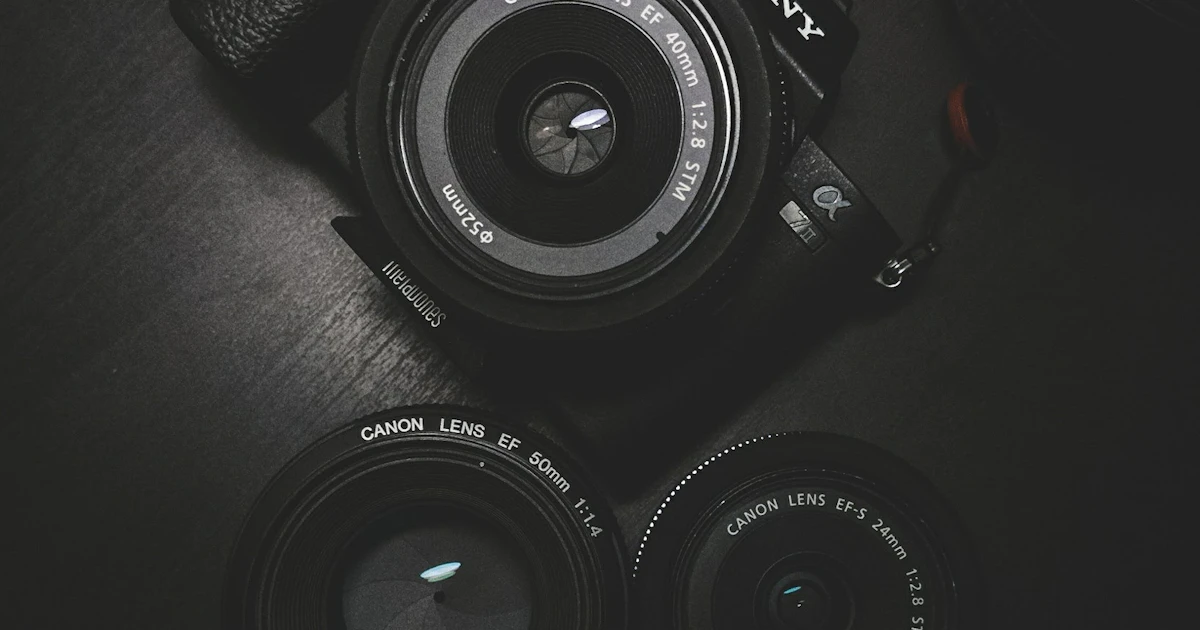
Your camera lens does capture a circular image - it's called the image circle. But the sensor (or film) behind it is rectangular, so it only records the center portion of that circle. The edges of the circular image get cropped out.
Think of it like this: imagine shining a round flashlight onto a rectangular piece of paper. The paper only catches the rectangular portion of the light - the round edges fall outside the paper.
A Journey Through Time
The rectangular photo didn't appear out of nowhere. It's the result of centuries of artistic and technological evolution.
Renaissance Art Standards
Painters established the rectangular canvas as the standard for portraits and landscapes. The shape allowed for efficient use of wooden frames and optimal composition.
First Photograph
Joseph Nicéphore Niépce captured the first photograph using a rectangular pewter plate. He followed existing artistic conventions.
Kodak Roll Film
George Eastman introduced roll film with rectangular frames, standardizing the format for mass production.
35mm Film Standard
Leica cameras popularized the 24mm × 36mm format (3:2 ratio), which became the industry standard for decades.
Digital Sensors
Digital cameras adopted rectangular CCD and CMOS sensors, maintaining compatibility with existing lenses and continuing the tradition.
Smartphone Era
Modern smartphones use various aspect ratios (4:3, 16:9, etc.) but all remain rectangular, optimized for our screens.
Eastman's philosophy of simplicity extended to format - keeping photos rectangular made printing, framing, and storing images straightforward for millions of new photographers.
The Science of Shape
Let's get technical for a moment. Why specifically rectangles?
The Lens Creates a Circle
Every camera lens projects a circular image because lenses are, well, circular. This projected circle is called the image circle. It needs to be large enough to cover the entire sensor or film frame.
The Sensor Crops the Circle
The rectangular sensor sits in the center of this image circle, capturing only the sharpest, clearest portion. The corners of the circle (where distortion and vignetting are worst) are ignored.
| Component | Shape | Why This Shape |
|---|---|---|
| Lens Elements | Circular | Easiest to manufacture with uniform optical properties |
| Aperture | Circular (or polygonal) | Creates even light distribution and pleasing bokeh |
| Image Circle | Circular | Natural result of circular optics |
| Sensor/Film | Rectangular | Manufacturing efficiency + artistic tradition |
| Final Photo | Rectangular | Matches sensor shape |
Manufacturing Economics
This is the real kicker: rectangular sensors are vastly easier and cheaper to manufacture than circular ones.
Silicon wafers (the raw material for digital sensors) are circular. When you cut rectangular sensors from a circular wafer, you can fit far more sensors with minimal waste. Try fitting circular sensors on a circular wafer - you'd waste enormous amounts of expensive silicon between the circles.
The Packing Problem
This is actually a classic mathematical problem called "circle packing." Rectangles tile perfectly with zero waste. Circles? About 21% of the space between them goes unused. In semiconductor manufacturing, that 21% represents millions of dollars.
Why Not Other Shapes?
Let's play devil's advocate. Why not triangles, hexagons, or circles?
Why Rectangles Win
- Rectangles tile perfectly - no gaps when arranging photos
- Efficient manufacturing from rectangular materials (paper, screens, wafers)
- Natural alignment with horizontal and vertical lines in architecture
- Easy to frame, store, and display
- Matches book pages, screens, and traditional art formats
Alternative Arguments
- Circular photos would match the lens output (no cropping waste)
- Triangles could create interesting artistic compositions
- Hexagons pack slightly better in some arrangements
- Square photos eliminate orientation decisions
The Circle Alternative
Some cameras have experimented with circular photos. The Lomo Fisheye camera produces circular images, as do some 360-degree cameras. But they remain novelties because:
- Display challenges: Try fitting a circular photo on a rectangular screen or page
- Storage inefficiency: Digital files would need extra data to handle the curved edges
- Framing difficulties: Ever tried to find a circular picture frame?
The Square Compromise
Instagram originally forced all photos into squares (1:1 ratio) - a compromise between horizontal and vertical orientations. This worked well for their grid layout but limited photographic composition. They eventually added rectangular options due to user demand.
Aspect Ratios Explained
Not all rectangles are created equal. Different cameras use different aspect ratios:
| Aspect Ratio | Common Use | Character |
|---|---|---|
| 4:3 | Most smartphones, Micro Four Thirds | More square, good for portraits |
| 3:2 | Full-frame cameras, 35mm film | Classic photography standard |
| 16:9 | Video, some phones | Wide, cinematic feel |
| 1:1 | Instagram (original), Medium format | Square, balanced composition |
| 21:9 | Cinema, ultrawide monitors | Extremely wide, panoramic |
The 3:2 Origin Story
The 3:2 ratio (used in 35mm film) came from a practical decision by Oskar Barnack at Leica. He used standard 35mm cinema film but turned it sideways and doubled the frame size. The result was 24mm × 36mm - a 3:2 rectangle that became the gold standard.
The Human Factor
Here's where biology enters the conversation.
Our Vision is Rectangular(ish)
Human field of vision spans approximately 180 degrees horizontally but only about 120 degrees vertically. Our eyes naturally see a landscape-oriented "rectangle" of the world.
This is why:
- Landscape orientation feels natural for scenery
- Portrait orientation requires rotating the camera (and feels less natural for scenes)
- Widescreen TVs and monitors are horizontal, matching our vision
The Golden Ratio Connection
Artists have long observed that rectangles with proportions near the golden ratio (approximately 1.618:1) feel aesthetically pleasing. The 3:2 aspect ratio (1.5:1) is remarkably close to this ideal, which may explain why it's remained popular for nearly a century.
Fun Facts
Because every good trivia article needs a "wow" section:
First Selfie?
Robert Cornelius took the first photographic self-portrait in 1839. Yes, it was rectangular. And yes, he had to stand still for 3-15 minutes for the exposure.
Circle Photos Do Exist
The Kodak Brownie camera produced circular images, and some instant cameras like the Polaroid 600 had circular versions. They never caught on.
Your Retina is Curved
The light-sensitive surface in your eye is actually a curved bowl shape - neither flat nor rectangular. Your brain processes it into what feels like a wide, horizontal field.
Medium Format is Different
Some professional medium format cameras use 6×6cm (square), 6×7cm, or even 6×17cm (panoramic) frames. Rectangles dominate, but squares have their fans.
Sensor Megapixels
When cameras advertise megapixels, they're counting the rectangular sensor's total pixels. The actual image circle from the lens contains much more potential information - it's just cropped away.
And every photograph you make is shaped by 500 years of rectangular tradition.
Bottom Line
Key Takeaways
- 1Camera lenses capture circular images, but only the rectangular center is used by the sensor
- 2Rectangular sensors are dramatically cheaper to manufacture than circular ones
- 3The tradition of rectangular images dates back to Renaissance painting - over 500 years
- 4Human vision is naturally wider than tall, making horizontal rectangles feel natural
- 5Different aspect ratios (3:2, 4:3, 16:9) serve different purposes, but all remain rectangular
- 6Manufacturing efficiency, artistic tradition, and biology all converged on the same solution
So the next time you snap a photo, remember: you're participating in a tradition that spans from Renaissance workshops to silicon foundries. That rectangular image is the result of centuries of art, physics, economics, and human perception all agreeing on the same answer.
The circular lens and rectangular sensor aren't a contradiction - they're a collaboration. The lens captures light beautifully; the sensor shapes it into something we can display, print, and share.
And honestly? Triangular selfies would just be weird.